September 2024
Cost Reduction
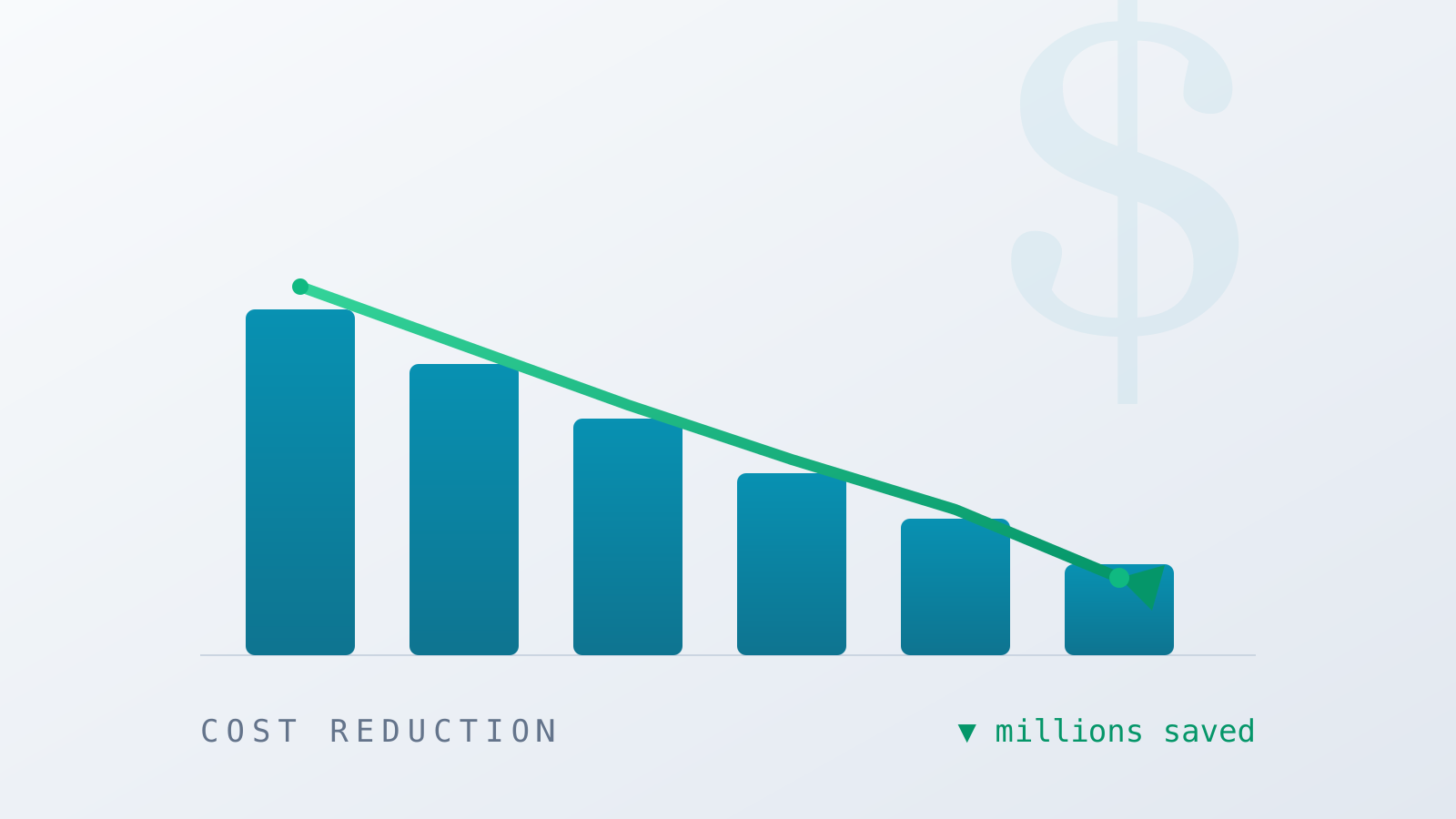
A cross-cutting program to cut data-platform cost across storage, ingestion, and processing — driven by architecture reviews and impact-vs-effort prioritization, reducing spend by millions without compromising performance.
Overview
A cross-cutting program to bring down the cost of running the data platform at scale — not a single fix, but a prioritized backlog of cost levers across the three areas that dominated the bill: storage, ingestion, and data processing.
I ran it as an ongoing initiative: regular architecture reviews to find where the money was actually going, cross-team discussions to weigh the options, and impact-vs-effort prioritization to decide what to tackle first and what to defer. Every change had to hold the line on performance and reliability for a platform every customer depends on.
Where the cost went — and what we did about it
Storage
The layer we're actively tuning now. Levers include right-sizing what's retained versus expired, partitioning and clustering so queries scan less data, and matching storage class to access patterns so cold data stops paying hot-storage prices.
Ingestion
Making data cheaper to land. Moving to a batch-ingestion path — reading each landed batch once into native BigQuery tables and letting SQL do the fan-out — replaced chattier, per-record ingestion and cut the compute and I/O that ingestion had been quietly burning.
Data processing
Making transformation and query execution do more per dollar: a SQL-first processing engine that runs far cheaper per pipeline, and an in-memory serving layer that keeps repetitive dashboard reads off the analytical engine so they stop consuming query slots.
Outcome
Together these changes cut platform cost by millions while keeping performance and reliability intact. The hard part was rarely any single optimization — it was the prioritization and rollout: sequencing the highest-leverage work, aligning teams on the trade-offs, and shipping changes safely across a platform in constant use.